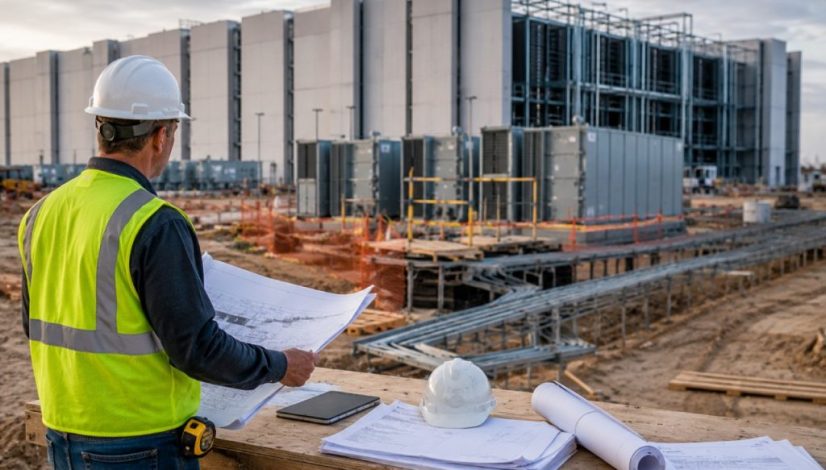
The Data Center Boom: Legal Risks for Texas Contractors
Texas is rapidly transforming into the world’s largest data center hub. Driven by the explosive growth of artificial intelligence (AI) and cloud computing, developers are pouring billions of dollars into hyperscale facilities across the state, particularly in the Dallas-Fort Worth (DFW) Metroplex. For commercial contractors, this boom represents a massive financial opportunity. However, building a gigawatt-capacity data center is not the same as building a standard commercial warehouse.
These highly complex, power-hungry projects carry unique legal risks that can quickly turn a lucrative contract into a costly dispute. From supply chain bottlenecks to strict performance guarantees, contractors must understand what they are signing before breaking ground.
As a Board Certified Texas Construction Law attorney with over 30 years of experience, Joe Tolbert has successfully represented contractors, engineering firms, and owners in negotiating complex development contracts and resolving high-stakes disputes. If you are bidding on or currently involved in a data center project, here is what you need to know to protect your business.
The Unique Complexity of Data Center Construction
Data centers are essentially massive, highly secure shells built to house sensitive, heat-generating technology. The true complexity lies in the infrastructure required to keep that technology running without interruption. This includes redundant power supplies, advanced cooling systems (such as liquid cooling), and heavy electrical switchgear.
Because these facilities are mission-critical for tech giants, the contracts governing their construction are often heavily weighted in favor of the developer or owner. Contractors are frequently asked to assume significant risk for factors that may be entirely out of their control.
1. Supply Chain Bottlenecks and Long-Lead Equipment
The most significant hurdle facing data center construction in 2026 is the procurement of specialized electrical equipment. Items like medium-voltage switchgear, transformers, and backup generators are currently experiencing lead times of 40 to 60 weeks or more.
A contractor can complete the physical shell of the building on schedule, but if the switchgear is delayed by the manufacturer, the facility cannot be energized.
The Legal Risk: If your contract includes a strict “time is of the essence” clause and heavy liquidated damages for delays, you could be penalized for supply chain issues you cannot control.
The Solution: Contractors must negotiate robust force majeure clauses that explicitly include supply chain disruptions, manufacturing delays, and material shortages as excusable delays. Furthermore, contracts should clearly define cost-sharing mechanisms if alternative, more expensive sourcing becomes necessary to meet the project schedule.
2. Power Access and Utility Delays
Data centers require an astonishing amount of electricity. A single hyperscale facility can consume as much power as a small city. In Texas, coordinating with the Electric Reliability Council of Texas (ERCOT) and local utilities to secure this power is a major logistical challenge.
Projects that look viable on paper often stall because the local utility cannot commit to a firm delivery timeline for grid connection.
The Legal Risk: Contractors who mobilize large crews only to sit idle waiting for the site to be energized face significant overhead costs. If the contract does not account for utility-caused delays, the contractor may struggle to recover these costs.
The Solution: Contracts must clearly delineate the owner’s responsibility for securing utility connections and provide the contractor with the right to claim schedule extensions and extended general conditions costs if the utility fails to deliver power on time.
3. Strict Performance and Commissioning Standards
Unlike a standard office building, a data center must meet exacting performance specifications before it is considered substantially complete. The commissioning process —where all redundant systems, cooling units, and backup generators are tested under load — is rigorous.
The Legal Risk: If the HVAC system fails to maintain the precise temperature and humidity levels required by the contract, or if the backup generators fail to engage within milliseconds during a test, the contractor may be held in breach of contract. This can lead to withheld retainage, delayed final payment, and claims for defective work.
The Solution: The contract must clearly define the commissioning standards, the testing protocols, and the specific criteria for achieving substantial completion. Contractors should also ensure that equipment warranties from manufacturers are properly assigned to the owner to avoid being held liable for inherent equipment failures.
Protecting Your Payment Rights
Given the massive scale of these projects, cash flow is critical for subcontractors and suppliers. The Texas Prompt Payment Act provides statutory deadlines for payments on private construction projects, generally requiring owners to pay prime contractors within 35 days of receiving an invoice, and prime contractors to pay subcontractors within 7 days of receiving payment.
However, if a dispute arises over a delay or a commissioning failure, payments can quickly freeze. Contractors and subcontractors must be diligent in preserving their mechanic’s lien rights. In Texas, the lien laws are notoriously complex, with strict notice requirements and filing deadlines that vary depending on your tier in the project hierarchy. Failing to send a required notice on time can result in the complete loss of your lien rights.
Why Experience Matters in Complex Construction
Negotiating a contract for a hyperscale data center requires a deep understanding of both construction law and the specific technical realities of the project. Standard form contracts (like AIA documents) are rarely sufficient without significant, customized modifications.
Joe Tolbert is rated AV Preeminent by Martindale-Hubbell and is one of fewer than 100 attorneys Board Certified in Texas Construction Law. He has a proven track record of protecting clients’ interests in multi-million dollar contract negotiations and complex commercial litigation, including successfully representing the DFW Airport Board in a major contract dispute.
Before you sign a contract that could put your entire company at risk, ensure you have expert legal counsel reviewing the terms.
Contact a Fort Worth Construction Attorney
The data center boom offers incredible opportunities, but the legal risks are equally massive. Don’t rely on a handshake or a standard contract template.
Protect your business by working with an experienced construction lawyer. Contact Joe Tolbert at 817-338-1700 to schedule a consultation with Joe Tolbert and ensure your contracts are built as solidly as your projects.